

The Lost Art of Rapport: Why Sellers Struggle And How to Fix It
Many sales leaders I speak to these days, regardless of industry, geography, or company size, have the same complaint:
“My reps don’t know how to build rapport with customers anymore!”
“They say ‘hi’, ask how the customer’s doing, and jump straight into the agenda. Virtual conversations feel forced, and in-person, it’s even worse. It all feels transactional. Like we’re just another vendor, not a trusted advisor.”
In the wake of years of virtual selling, remote interactions, and post-pandemic social rewiring, it feels like the muscle that once came naturally to most sellers has atrophied.
That’s a problem because Gartner predicts that by 2030, 75% of B2B buyers will prefer sales experiences that prioritize human interaction over AI (especially in complex or high-stakes transactions). And Salesforce’s State of Sales report reveals that 79% of buyers say it’s absolutely critical or very Important to interact with a salesperson who is a trusted advisor.
But when reps don’t build rapport early:
- Buyers stay guarded
- Information becomes harder to obtain
- Insights land with less impact, and
- Trust never fully forms, which, in complex sales, is the whole game.
But here’s the encouraging part: rebuilding the ability to create trust and human connection isn’t a soft skill. It’s a science-backed competency. And once you understand the mechanics behind it, you can rebuild the muscle quickly and intentionally.
Why Rapport Matters: The Science of Connection
Rapport isn’t chit-chat, a time-filler while you’re waiting for other participants to join you, nor is it “optional warm-up time.”
It’s the psychological foundation for trust, and trust is the lens through which buyers interpret everything else you say.
And the research behind this is overwhelming.
1. Humans Decide Whether to Trust You Almost Instantly
In a previous post on nailing the first 10 seconds of your sales call, I shared a study that found people form impressions of competence, likability, and trustworthiness in as little as 100 milliseconds. Long before you get to your agenda, demo, or discovery questions, the buyer’s brain has already made micro-judgments about you:
“Does this person sound confident?”
“Are they here to help me or sell me?”
“Do I want to keep listening?”
Rapport interrupts that defensive pattern.
2. Rapport Directly Influences Outcomes
Another study found that strong early rapport in B2B interactions significantly increases perceived collaboration and can even compensate for weaker parts of the later conversation. And research shows that buyers who feel connected to their salesperson are 2–3x more likely to share deeper insights, directly improving win rates.
3. Trust Is the Mechanism That Makes Advice Land
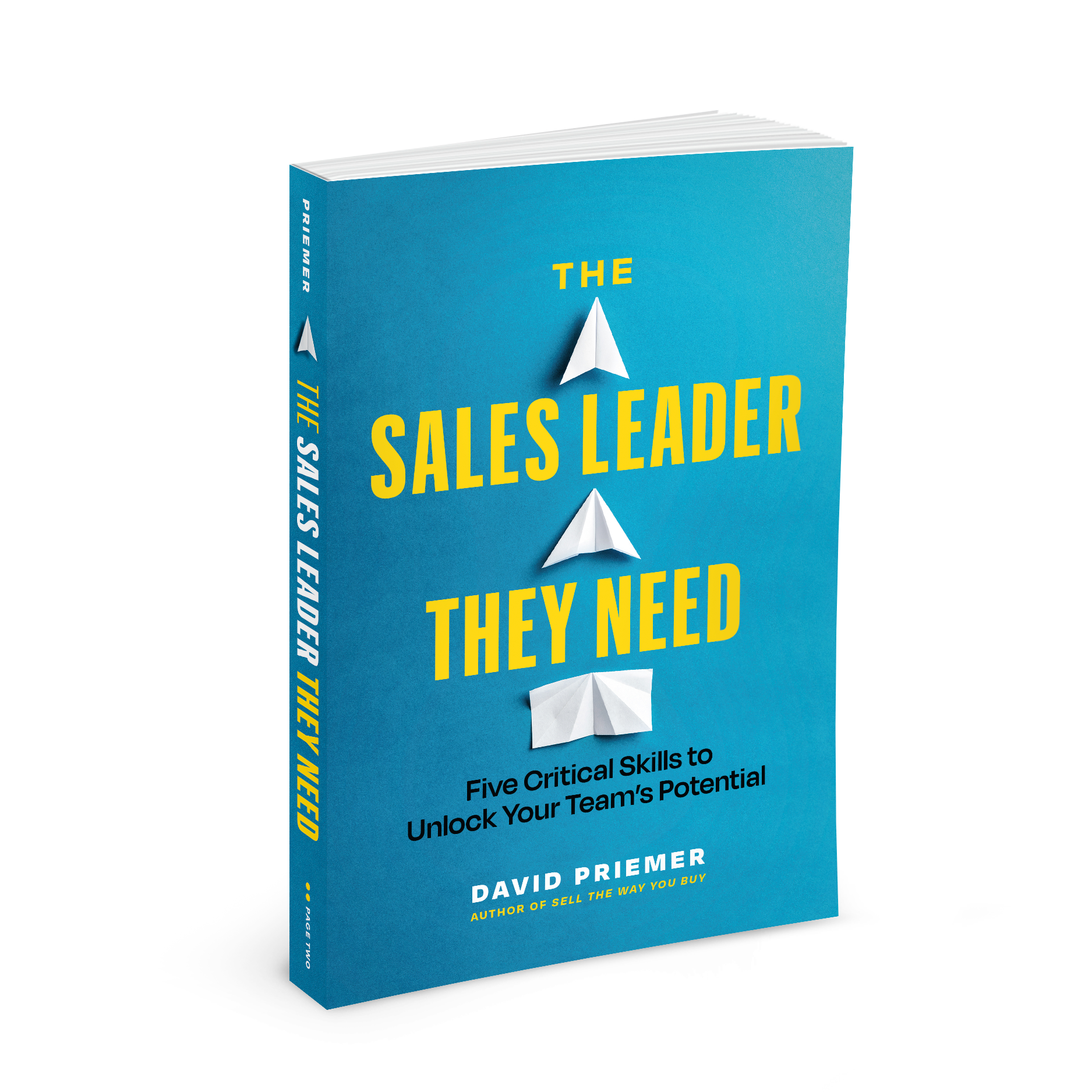
In The Sales Leader They Need, I share a powerful study that examined the data from the 360-degree assessments of 87,000 leaders. It revealed that the number one factor that drove trust between leaders and their teams was positive relationships because it enhances the absorption of ideas.
In other words, when we have good relationships with people, they’re more likely to view our suggestions as helpful and productive. This is especially critical in a sales context where salespeople are often called upon to challenge their customers and lead them into the future.
The psychological pathway is simple:
Rapport → Trust → Receptivity → Influence
Why It’s Getting Harder for Reps (Especially In Person)
For years, reps lived inside scheduled, structured, time-boxed virtual meetings. You clicked “Join,” smiled for five seconds, made polite small talk, and got to business.
Now, many sellers are back in person, where rapport isn’t a five-second pleasantry; it’s woven through the entire experience:
- The walk from reception to the meeting room
- The pause while they grab coffee
- The conversation as coats come off and laptops open.
The physical environment is full of personal cues, and this is where I see reps fall down the most.
Why? Because in-person rapport is less scripted, more fluid, and more socially dynamic. And that muscle hasn’t been trained in years.
It’s not that reps don’t want to build rapport. It’s that they don’t know how anymore.
What Makes Rapport Work: Three Scientific Anchors
1. Similarity
Humans are wired to trust people who feel “like us.” Shared interests. Shared values. Shared experiences. Even shared energy. That’s why research shows that most buyers are belief-driven, making purchasing decisions based on the shared values of the companies they do business with. It also explains the strong retreat from Tesla consumers have shown in recent years on account of their views of Elon Musk (which has nothing to do with the cars the company makes).
Similarity triggers safety.
2. Mirroring
Subtly aligning your pace, tone, posture, or conversational rhythm reduces perceived social distance; a key ingredient in trust formation.
In fact, in Sell The Way You Buy, I reference a study that found restaurant servers were able to increase their tips by 70 percent simply by repeating their customers’ verbalizations back to them exactly. And another study found that lawyers who mirror judges’ linguistics are more likely to win cases!
Not mimicry. Alignment.
3. Active Listening
One of the most replicated findings in all of interpersonal psychology is that people feel warmer, safer, and more trusting when they feel heard. It’s not surprising that in the Salesforce State of Sales Report, when salespeople were asked to list factors which they felt had an extreme or substantial impact on converting a prospect to a customer, listening topped the list.
Active listening communicates respect and partnership.
These aren’t soft traits, they’re trust accelerators.
How to Rebuild the Rapport Muscle (Across All Selling Environments)
So what can reps do to rebuild rapport intentionally?
1. Use the Environment (In-Person Superpower)
When you walk into a buyer’s office or meet them in a shared physical space, you’re stepping into a room full of trust cues. Every object, a framed certificate, a family photo, a sports jersey, even the type of mug they use, can help you find shared context.
Most reps ignore this. Top performers use it masterfully.
You’re on a Zoom call and notice one of your favorite books on their shelf.
“I see Thinking Fast and Slow behind you. I recommend that book to everyone on my team! Is that one of your favorites?”
Environmental cues aren’t just decorations. They’re bridges and invitations. They signal interest, not agenda.
A simple, “Oh, you’re a Liverpool fan too?” has more bonding power than a perfect product pitch.
2. Match the Energy, Not the Script
One of the surest ways to break rapport is to stick to your rigid opening script when the human in front of you is giving you a totally different vibe.
Buyers read tone instantly, whether it matches where they are mentally and emotionally.
Example:
You walk into a meeting expecting a high-energy brainstorming session, but your buyer greets you with:
“Hey, just a heads up, we’ve had a wild morning over here. Fire drills everywhere.”
A scripted opener like:
“Well, I’m excited to walk you through our roadmap today!”
…lands flat and feels tone-deaf.
A rapport-builder would instead say:
“Totally understand, sounds like it’s been a day. Why don’t we take a breath for a second? We can keep this conversation as light or as focused as you need.”
Instant alignment. Instant safety.
Or in a virtual meeting, if the buyer comes in upbeat and conversational, match that pace. If they’re quiet and reflective, slow yourself down.
Energy matching builds trust because it signals: “I’m meeting you where you are, not forcing you into my agenda.”
3. Show Curiosity Without Agenda
Curiosity is one of the most underrated rapport tools in selling because it has nothing to do with product and everything to do with personhood.
But here’s the key: it must be agenda-free.
Example:
You’re meeting in person and you pass by a busy whiteboard full of product sketches and sticky notes.
Instead of jumping into discovery mode (“What is the team trying to solve?”), you say:
“This looks like a fun project. How long has the team been working on it?”
It’s curiosity for the sake of connection, not qualification.
Another example in a virtual call:
“I saw your LinkedIn post about your Q4 goals, how’s the team feeling heading into the final stretch?”
No pitch. No angle. Just human interest.
People trust curiosity because it feels like respect. And people open up more when they feel respected.
4. Listen Like You Mean It
Almost every rep thinks they’re a good listener. Very few actually are.
True listening, the kind that builds rapport, has three components:
- Ask a thoughtful question
- Pause long enough for a real answer
- Reflect back what you heard, without adding your spin
Example:
Customer says:
“Honestly, onboarding has been our biggest headache this quarter.”
A typical rep responds:
“Totally, our platform can help with that…”
A rapport-building rep says:
“Got it. Sounds like onboarding is draining a lot of your team’s energy. What’s been the toughest part?”
That reflection accomplishes two things instantly:
- The buyer feels heard.
- The buyer feels safe to go deeper.
Listening, real listening, lowers buyer defenses faster than any clever opener.
[Check out this post for more tips on how to practice the art of listening in sales]
5. Slow Down the Transition Into “Business Mode”
This one is HUGE, especially in person.
Rushing into the agenda tells the buyer, “My priority is my process, not our connection.”
Slowing down tells them, “We’re two humans having a conversation. Let’s start there.”
Example:
You sit down in a conference room. The buyer sets their coffee down and exhales.
A rushed rep jumps in with:
“Great, thanks for meeting. I’ll start by walking you through our agenda today.”
A rapport-builder does this instead:
“No rush at all. Let’s settle in for a second. It feels like you’ve had quite a day so far?”
Or on a virtual call, when the buyer logs in 45 seconds late:
Instead of:
“No worries, let’s dive in.”
Try:
“I’ve been there, back-to-back calls are brutal. Let’s catch our breath before we start.”
That 10-second pause can shift the entire emotional tone of the conversation.
The Bottom Line
Rapport isn’t a warm-up exercise. It’s the core mechanism that determines whether your buyer:
- trusts you
- believes you
- opens up to you
- or buys from you.
And in a world where selling has become more virtual, more automated, and more transactional, rapport hasn’t become less important, it’s become a differentiator.
If the art of rapport has been lost, it’s time to bring it back. Not nostalgically. Scientifically.
Because before buyers buy your product, your solution, or your roadmap…they buy you.